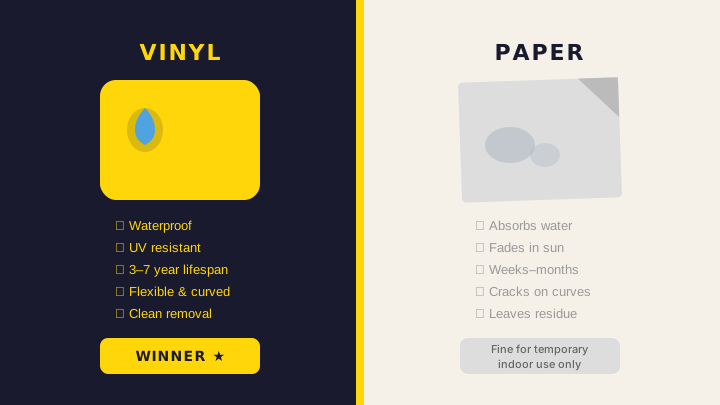
Vinyl vs Paper Stickers: Which Is Better? (Honest Comparison)
Not all stickers are created equal. The material matters enormously — and choosing the wrong one means peeling corners, faded colors, and wasted money. Here is an honest comparison of vinyl vs paper stickers, covering everything you need to know before you buy.
The Short Answer
Vinyl stickers are more durable, waterproof, and longer-lasting. They cost slightly more but outlast paper stickers by years.
Paper stickers are cheaper, easier to write on, and fine for short-term or indoor-only use.
For anything you want to stick to a laptop, water bottle, car, or anything that sees real-world use — vinyl is the right choice, full stop.
Side-by-Side Comparison
| Feature | Vinyl Stickers | Paper Stickers |
|---|---|---|
| Water resistance | Fully waterproof | Soaks through, tears |
| UV resistance | High (colors stay vibrant) | Fades quickly |
| Durability | 3–7 years outdoors | Months at best |
| Flexibility | Conforms to curves | Cracks and peels |
| Removal | Clean removal, no residue | Tears, leaves residue |
| Writeable surface | No (unless matte laminated) | Yes |
| Cost | Slightly more expensive | Cheaper |
| Best for | Laptops, bottles, cars, outdoor | Temporary labels, mailings, events |
Water Resistance
This is where paper stickers fail immediately. A single encounter with rain, a spilled drink, or a dishwasher cycle and a paper sticker is done. It soaks up water, the adhesive weakens, and the sticker either peels off or becomes a soggy mess.
Vinyl is inherently waterproof. The material itself does not absorb water, and the adhesive is designed to maintain its bond even when wet. Our vinyl stickers hold up on:
- Water bottles and tumblers (including through hand washing)
- Car bumpers and windows exposed to rain
- Outdoor surfaces
- Surfboards, skateboards, and sports equipment
The one caveat: even vinyl needs time to cure. Wait 72 hours after applying before submerging or running a water bottle through the dishwasher.
UV Resistance and Color Longevity
Sunlight destroys paper stickers fast. The inks fade, the paper yellows, and within a few months an outdoor paper sticker is unreadable.
Vinyl stickers — especially those with a UV-resistant laminate coating — resist fading for years. This is why vinyl is the standard material for outdoor signage, vehicle wraps, and window graphics. The same quality that keeps a business sign vibrant for years keeps your laptop sticker looking sharp.
If you’re applying stickers to a car, window, or anything that lives outside, vinyl is not just better — paper is not even a viable option.
Durability and Scratch Resistance
Vinyl was originally developed for outdoor signage and vehicle wrapping. It is engineered to survive physical wear, not just moisture.
Paper stickers scratch easily. The printed surface is exposed and soft. One pass with keys or a rough surface and the design is damaged.
Vinyl stickers (particularly those with a clear laminate topcoat) are significantly more scratch-resistant. The laminate layer protects the ink, so your sticker survives the rough life inside a bag, in a pocket, or on a bumper taking road debris.
Flexibility and Curved Surfaces
Paper is rigid. When you try to apply a paper sticker to a curved surface — like a water bottle or a helmet — it buckles, wrinkles, and peels. You can’t avoid it; paper simply doesn’t bend without creasing.
Vinyl is flexible. It conforms to gentle curves without cracking or wrinkling. This is why vinyl is the right material for anything with a curved profile. A well-made vinyl sticker wraps smoothly around a Hydro Flask or a Nalgene without fighting you.
For very tight curves, warming the sticker slightly with a hair dryer makes it even more pliable.
Removal
Eventually, even the best sticker gets removed — you’re selling a laptop, redecorating, or just changing your vibe.
Paper sticker removal is often destructive. The paper tears, leaving adhesive residue behind that’s frustrating to clean. If you try to remove a paper sticker without heat, you often end up with half the sticker on the surface and sticky gunk that takes serious effort to clean up.
Vinyl peels off cleanly. Warm it slightly with a hair dryer, lift a corner, and peel slowly at a low angle. The adhesive comes off with the sticker in most cases. Any residue wipes away with isopropyl alcohol.
When Paper Stickers Make Sense
Paper stickers aren’t useless. They genuinely have their place:
- Temporary labels — pricing stickers, name badges, address labels
- Mailing stickers — for packages and envelopes
- Event stickers — short-term use at weddings, parties, or conferences
- Handwritten labels — organizing jars, files, or anything you need to write on
- Craft projects — paper-based scrapbooking where vinyl would look out of place
If the sticker is indoors, temporary, or you need to write on it — paper works. For everything else, vinyl is worth the small extra cost.
What Makes a Good Vinyl Sticker?
Not all vinyl is the same quality. Here’s what separates great vinyl stickers from mediocre ones:
Material Grade
- Cast vinyl — more expensive, thinner, conforms better to curves, lasts longer. Used for vehicle wraps and high-end applications.
- Calendered vinyl — less expensive, slightly thicker, better for flat surfaces. The standard for quality consumer stickers.
Laminate Coating
A UV-resistant laminate topcoat adds protection against scratches and extends the life of the colors significantly. Look for stickers that specify a laminate finish.
Adhesive Quality
Permanent adhesive vs removable adhesive — the right choice depends on the application. Most decorative stickers use permanent adhesive. Some stickers (especially those meant for walls or glass) use removable adhesive so they come off cleanly.
Print Quality
The printing method matters. Screen printed and digitally printed vinyl both produce excellent results, but cheap digital prints without proper inks fade faster. Quality stickers use UV-stable inks designed to last.
Frequently Asked Questions
Are vinyl stickers dishwasher safe? Some are, some aren’t — it depends on the quality of the materials. Wait 72 hours after applying, then check the product listing for dishwasher safety. High-quality vinyl with a full laminate coat usually handles the top rack fine. Hand washing is always safer.
Can you print on vinyl at home? Yes, with a vinyl-compatible inkjet printer and the right vinyl sheets. However, home-printed vinyl typically has less UV resistance and durability than commercially produced stickers unless you apply a laminate coat afterward.
Do vinyl stickers damage laptop surfaces? No — quality vinyl with removable or standard adhesive does not damage laptop surfaces when removed correctly. Heat the sticker, peel slowly, and clean any residue with isopropyl alcohol.
How long do vinyl stickers last on a car? Outdoor-grade vinyl stickers last 3–7 years on a car exterior when properly applied. UV-resistant cast vinyl can last even longer. Paper stickers would typically fail within a season outdoors.
Are all vinyl stickers the same thickness? No. Thickness varies by vinyl grade and product. Thinner vinyl (like cast vinyl) conforms better to curves. Thicker vinyl can be more rigid. For most consumer applications, the difference is minimal.
Want to see what quality vinyl stickers look like in person? Check out our full collection at nerdtypestuff.com — all our stickers are made with durable vinyl designed to actually last. And if you’re about to apply some new stickers, read our guide on how to apply vinyl stickers without bubbles first.